
York County Arrest Warrants Explained
South Carolina demands probable cause before any arrest warrant issues. In York County, magistrates sign arrest and search warrants, and the General Sessions clerk keeps the criminal files at the Circuit Court level. Whoever issued the order controls its case record. A law-enforcement officer usually brings a sworn complaint or affidavit. When a private citizen seeks charges, the court leans on a courtesy summons instead, and a failure to appear on that summons can trigger a warrant if the legal standard is met.
York County Arrest Warrant Process
South Carolina Code section 22-5-110 sets out a magistrate's arrest authority and the official-capacity route for law-enforcement warrant requests. The local magistrate vets the papers, and the court then routes process to the agency that will serve it. General Sessions criminal papers live with the York County Clerk of Court. Read South Carolina's magistrate warrant statute. It frames the process but will not tell you whether an individual warrant is active or served. For a public case reference, search the York County Public Index, then call the issuing court to confirm.
Inside a York County Arrest Warrant
A served York County warrant copy can list the named person, the charge, the statutory citation, the sworn complaint, the issuing judicial officer, the issue date, the requesting agency, and service or return details. Bond and court-date information may sit in the docket instead. Sealed, juvenile, or active-investigation material can be withheld.
| Case reference | Use the warrant or instrument identifier if shown. identifier on served copy |
|---|---|
| Person and charge | Named subject, offense, and statutory citation when included. |
| Affidavit | Sworn complaint or probable-cause material, subject to access limits. |
| Issuing court | Judicial officer and court that authorized the warrant. |
| Service and return | Serving agency, execution or attempt, and return details. |
| Bond and setting | May be recorded in related bond or court docket information. |
A Served York County Warrant Copy
The Sheriff's FAQ allows a copy to be requested after service, from the Public Information Officer or through the Clerk of Court at Moss Justice Center. That timing matters. Nothing promises a pre-service copy, full public access to every affidavit, or release of material tied to a live investigation. The Sheriff's FAQ also explains why an unserved York County warrant may not surface in its own system, since the court may not have sent it over yet.
See the official Warrants Unit source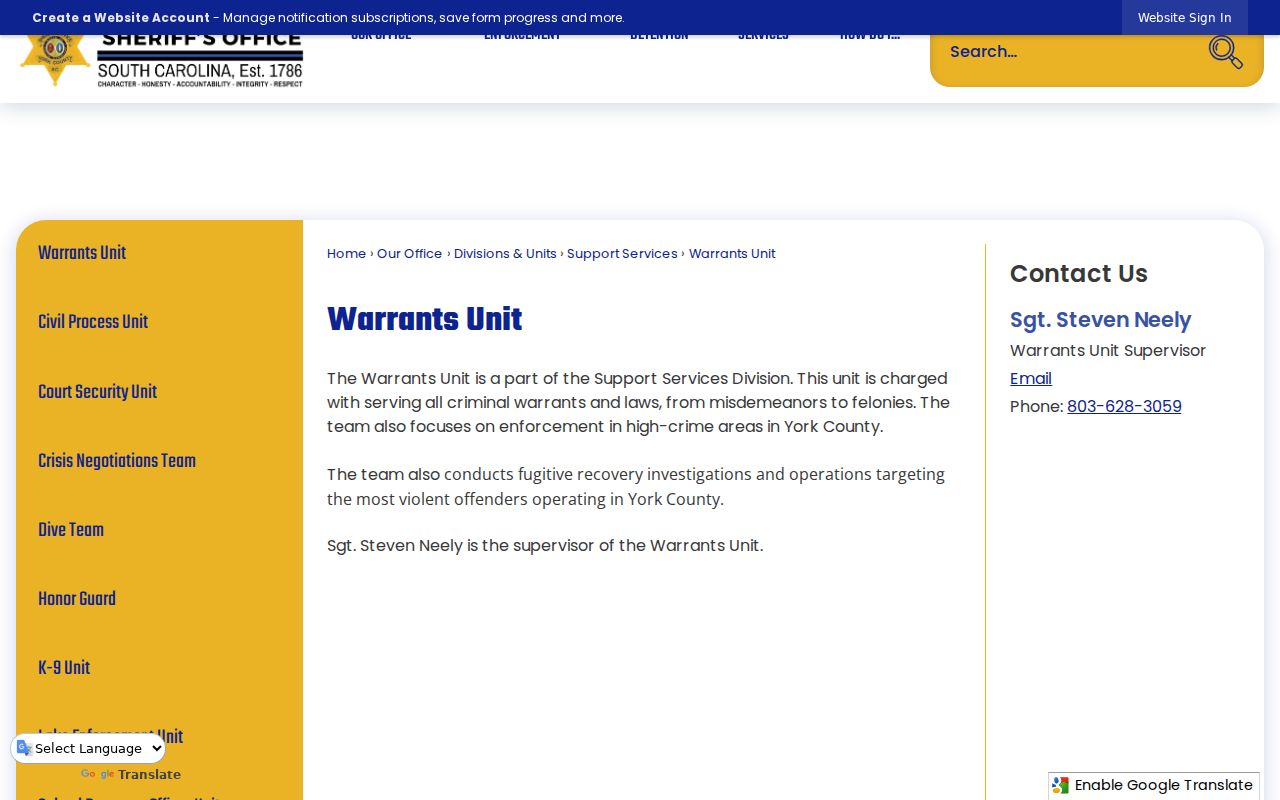
For a served York County warrant, ask the PIO or the Clerk which office holds the copy and what may be released.
Serving Arrest Warrants in York County
The Sheriff's Civil Process and Warrants Unit serves and returns criminal warrants for York County courts. City police can serve a municipal warrant, and the Sheriff may assist under state process. The serving agency is not always the issuing office. After an arrest, booking and bond review run through Moss Justice Center. Bond Court stays open 24 hours a day, 365 days a year, though it handles post-arrest processing rather than general warrant records. Hearing times track booking time and can shift.
York County Bond Court Follows Booking Time
The Sheriff's schedule maps each booking window to a Bond Court hearing time, from early-morning bookings to overnight settings, and it warns that times change. Bond Court sets release terms after arrest. Posting bond does not dismiss the charge or wipe every record. Review the Sheriff's current court information before trusting a listed time. For General Sessions dates, the Sheriff lists the Solicitor at 803-628-3020 and the Public Defender at 803-628-3031.
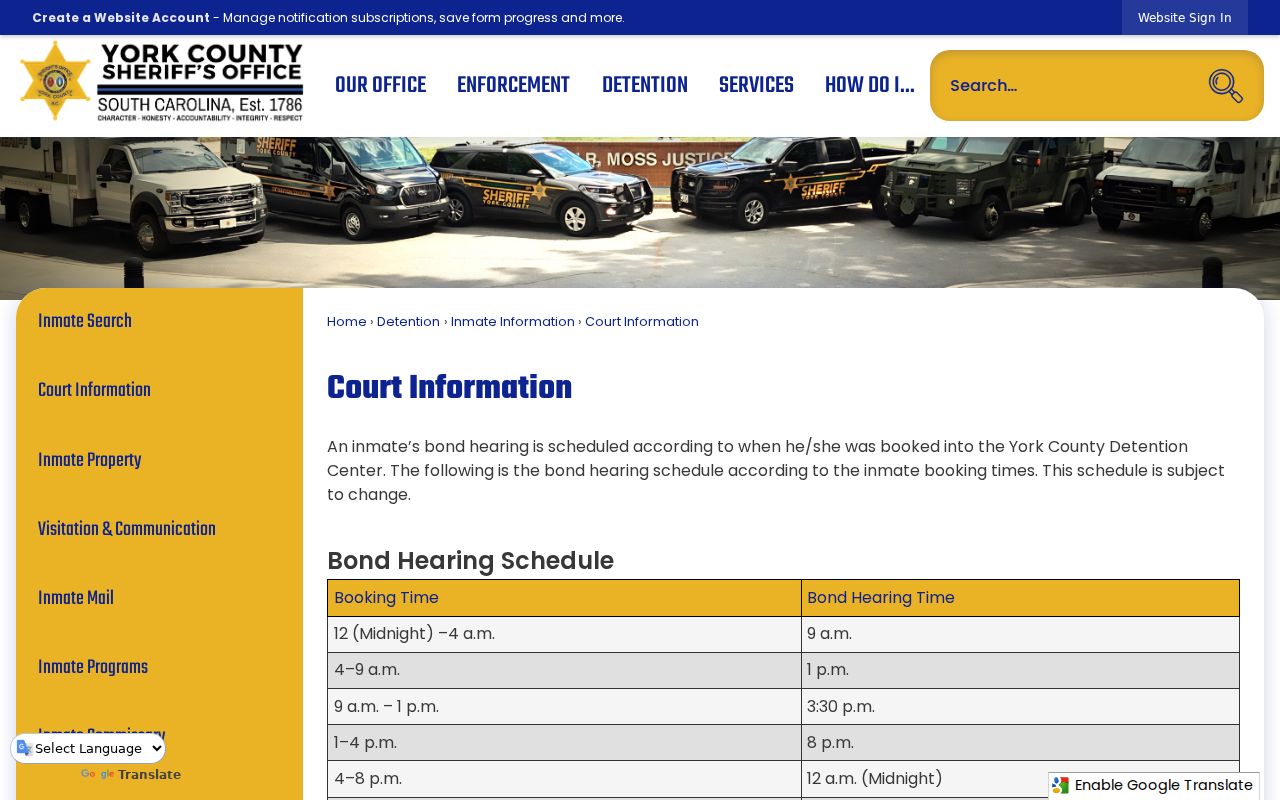
Ask the York County court for the next date, and keep the written release terms with the case papers.
Comparing Arrest, Summons, and Bench Warrants
These York County papers are not interchangeable. An arrest warrant authorizes custody on probable cause. A summons orders an appearance, while a bench warrant answers a missed court date or other obligation. The label tells you which clerk to call.
| Feature | Arrest Warrant | Summons | Bench Warrant |
|---|---|---|---|
| What it does | Authorizes arrest under a judicial warrant. | Orders an appearance without immediate arrest. | Authorizes action after a missed court duty. |
| Basis | Probable cause of an offense. | Process allowed for the case. | Failure to appear or comply. |
| Who issues it | Magistrate or authorized judicial officer. | Court process under the applicable law. | Judge in the court holding the case. |
| How to respond | Ask counsel and court about surrender and bond. | Appear by the date stated. | Ask the issuing court about recall, reset, or appearance. |
York County Unserved Arrest Warrants
The Sheriff's FAQ explains why an unserved York County warrant may be missing from its system: the court has not forwarded it, or deputies have not found the person. A "not found" answer from one office is not a final status. Call the issuing court and ask which agency received the process. A city court case may put the next detail with that city's police or clerk. For a General Sessions matter, the Clerk can explain docket access. If the warrant has been served, ask the PIO about the copy route. Each office holds only its piece of the record.
York County Arrest Warrant Access Rules
In York County, a warrant document, its affidavit, and the docket can each carry different access rules. The Sheriff's FAQ points to copies after service through the PIO or Clerk, but sealed, juvenile, privileged, or active-investigation material may be withheld, so ask the holding office which version can be released. South Carolina's FOIA text covers public-record access and its exemptions. A public docket entry does not put every supporting document online.
If There's an Arrest Warrant for You
Before you schedule anything, get the warrant's details from the issuing court: the charge, the case number, and whether it is still active. Then ask a lawyer which route fits best. A planned surrender, a bond already set, or a motion to recall or quash are all options counsel can weigh. A York County arrest warrant means custody when it is served, and a later bond hearing only sets release terms. It does not settle the case itself. Keep every paper you receive: the receipt, the release document, the next court date. Call the issuing court again after a recall or a payment, since a receipt alone does not confirm that both the docket and the serving agency have updated their records.
Important: Speak with counsel and the issuing court before arranging a surrender; an active arrest warrant may be served during contact with law enforcement.